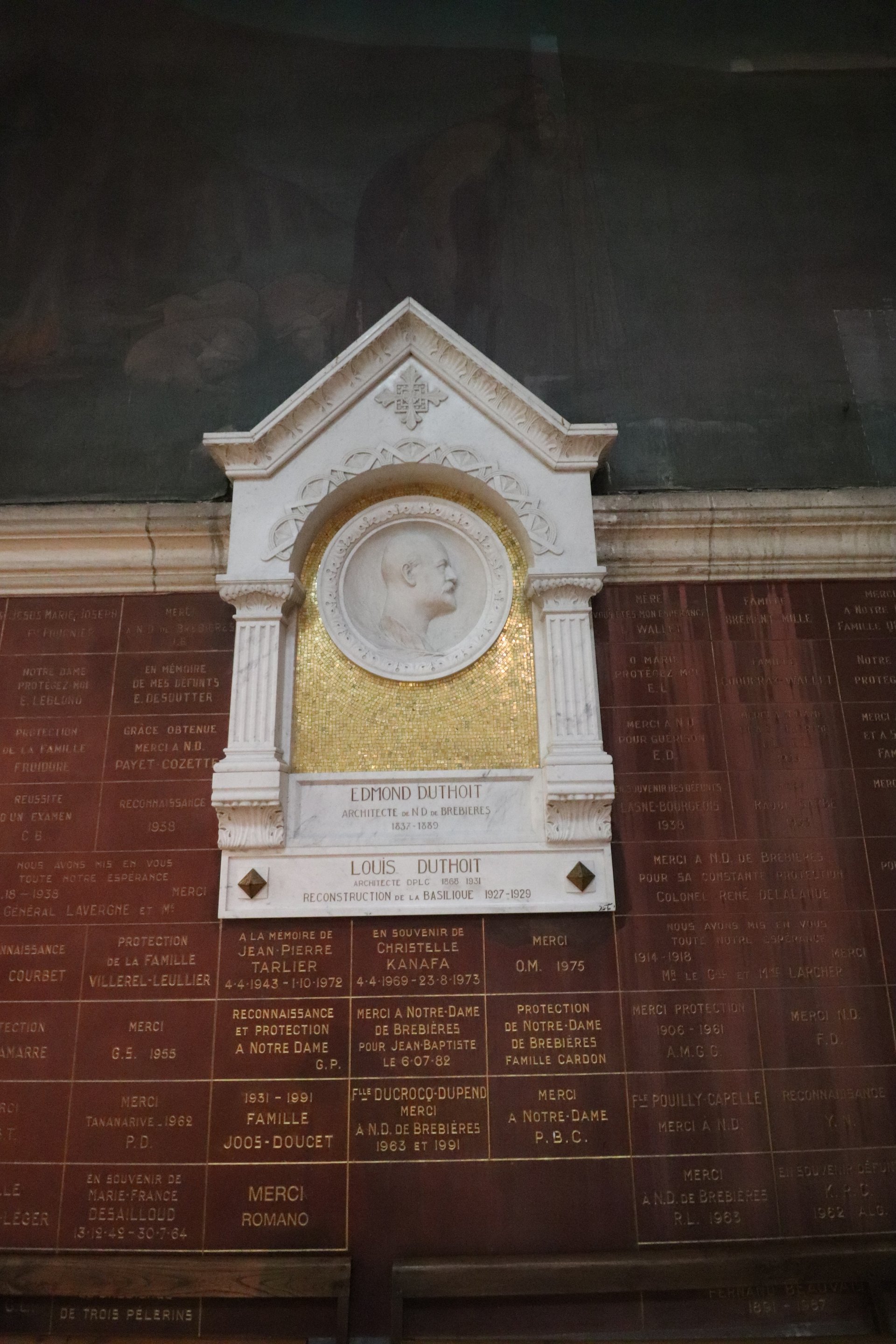
Edmond Duthoit was the first architect of the Basilica in 1885.
On this stone medallion, against a background of gold mosaic, is his name and below it his son's name, to whom we owe the second Basilica.
Edmond Duthoit was from Amiens, from a family of stonemasons, the best-known members of which were the "Duthoit brothers": Louis (his uncle) and Aimé (his father).
During his childhood, he traveled to North Africa and the Middle East, where he discovered Moorish art.
From 1861 onwards, he undertook various missions in the East and became chief architect of historical monuments in Algeria in 1880.
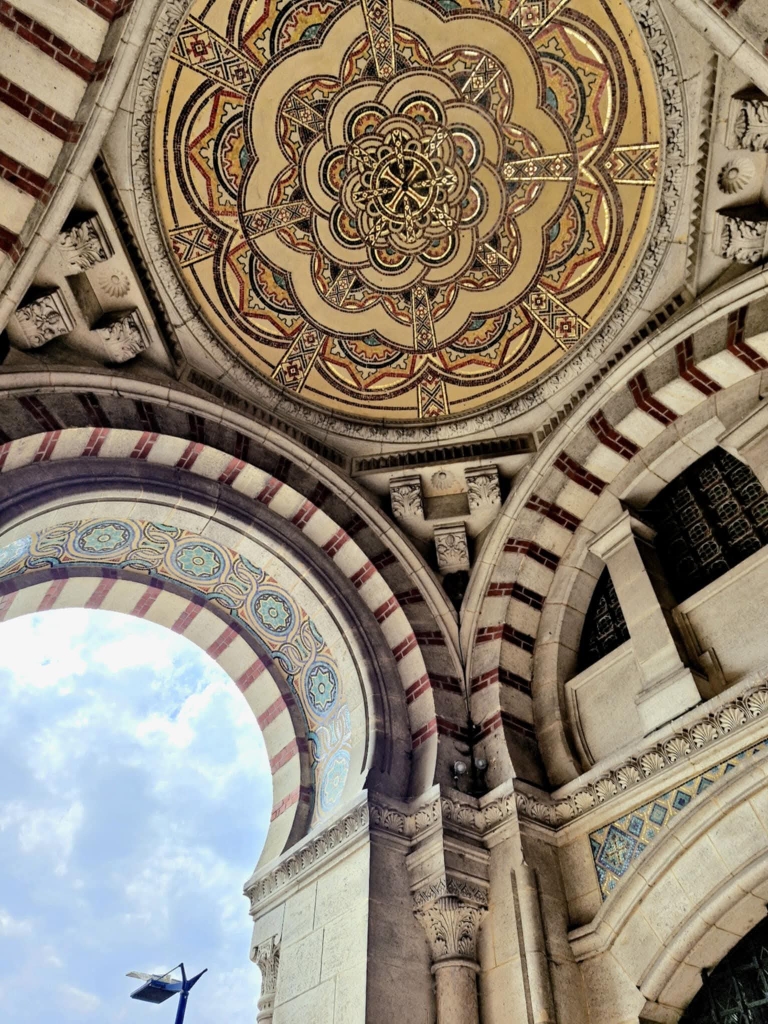
The basilica's vibrant colors are deeply inspired by his time in Algeria.
Joan of Arc occupies a pivotal place in French cultural and religious heritage, which explains her frequent representation in churches. Her historical role during the Hundred Years' War, marked by her commitment to the liberation of the kingdom, has made her an emblematic figure of faith and national identity.
The work of sculptor Anne-Marie Roux, it faces the statue of Sainte Thérèse. It is also very Art Deco style, very refined, with geometric forms but at the same time very feminine, without her armor and with the flames in the mosaic.
Anne-Marie Roux, a leading figure in contemporary sculpture, is renowned for her bold yet refined work. Trained in traditional techniques, she has developed a unique style, blending formal rigor with poetic sensibility. Her work, exhibited in numerous cultural venues, testifies to a profound artistic commitment and remarkable technical mastery. She thus embodies a demanding and inspiring approach to sculptural creation.
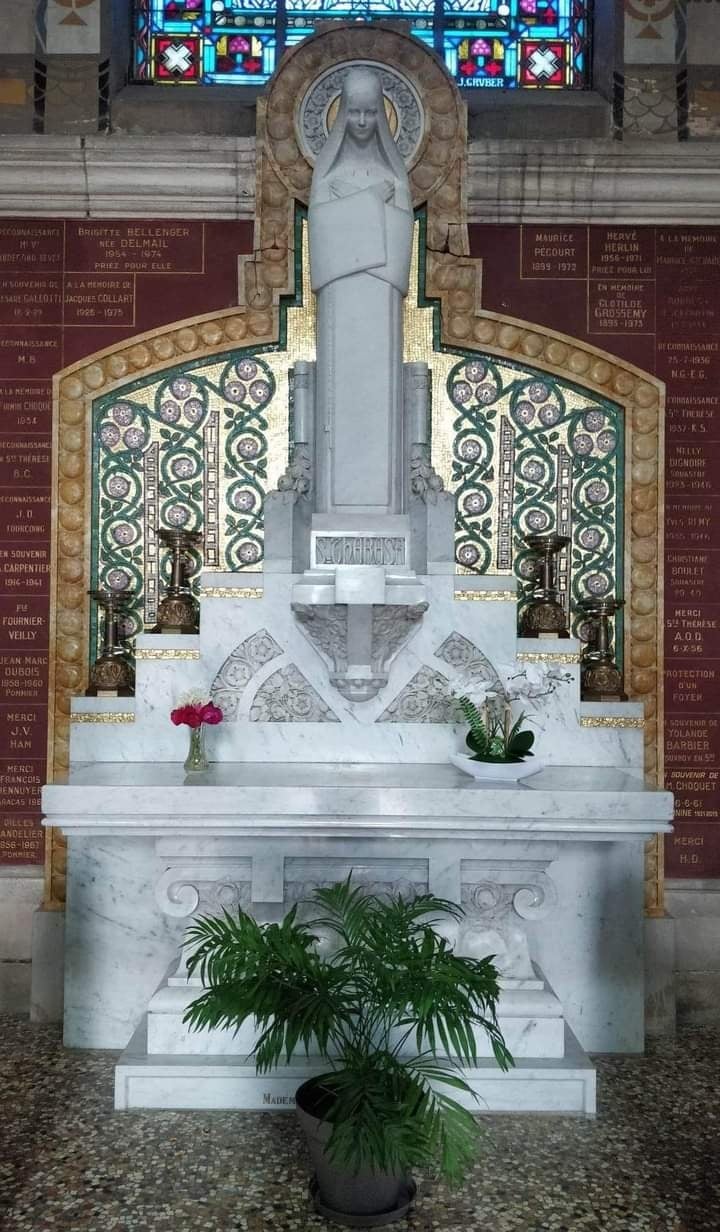
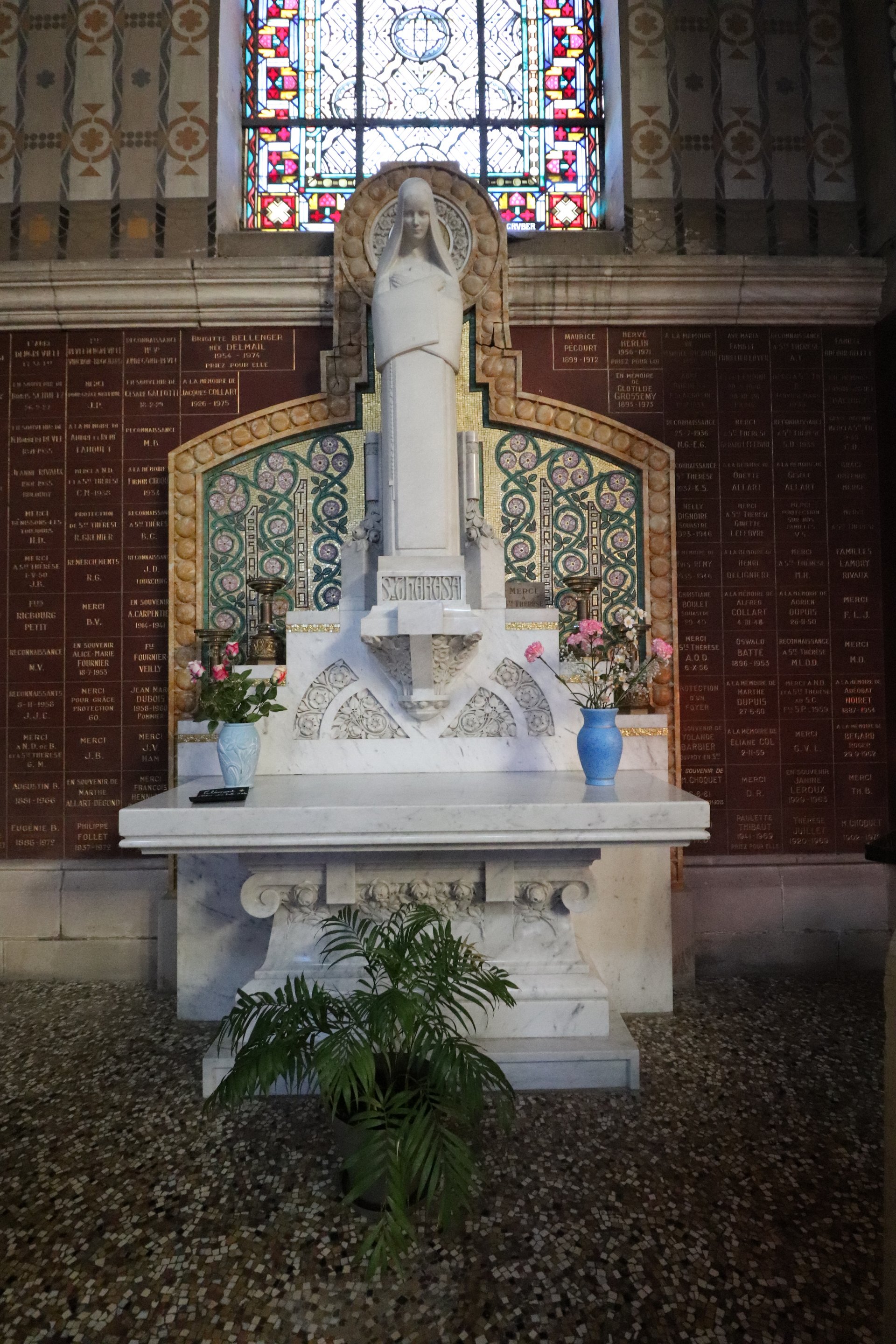
Admire the elegance and femininity of the statue of Sainte Thérèse, its geometric and refined lines typical of the Art Deco style.
Behind her, a sublime mosaic depicts the roses of Paradise, the fragrance of Holiness. It is a work by the sculptor Anne-Marie Roux.
Sainte Thérèse de Lisieux, known for her simple yet profound spirituality, left her mark on history with her message of love and trust in God. Despite her short life (she died at the age of 24), her influence remains significant, particularly through her autobiography, Histoire d'une âme (Story of a Soul), where she describes her "small path": performing every action with love, even the most humble.
A powerful symbol of her spirituality is linked to roses. Shortly before her death, she would have promised, "I will send down a shower of roses"— a metaphor signifying that she would intercede from heaven with graces and signs of divine tenderness. Even today, roses are associated with her miracles and her legacy, reminding us that holiness is lived through humility and perseverance.
Her story, both personal and universal, continues to inspire those seeking meaning in their commitment, whether spiritual or professional. A lesson in hope and quiet, yet transformative action.
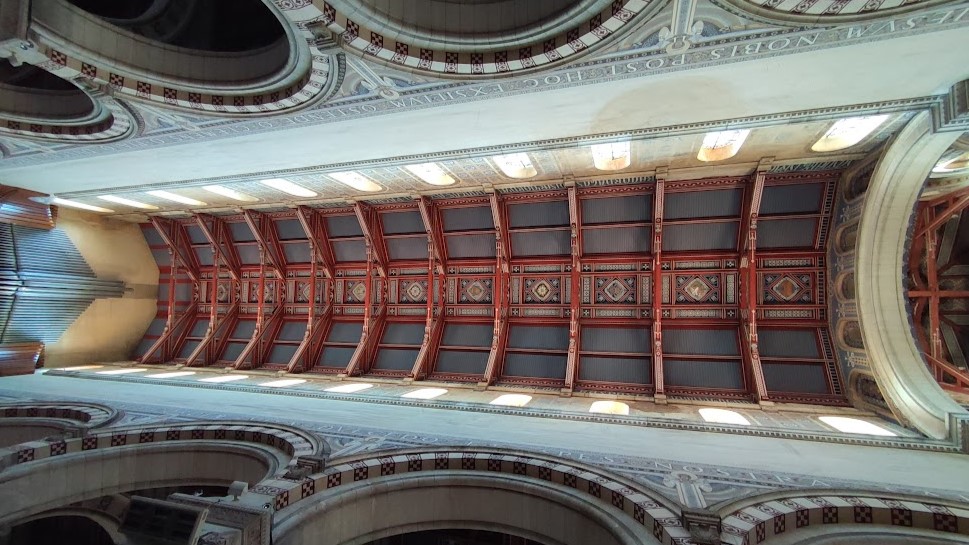
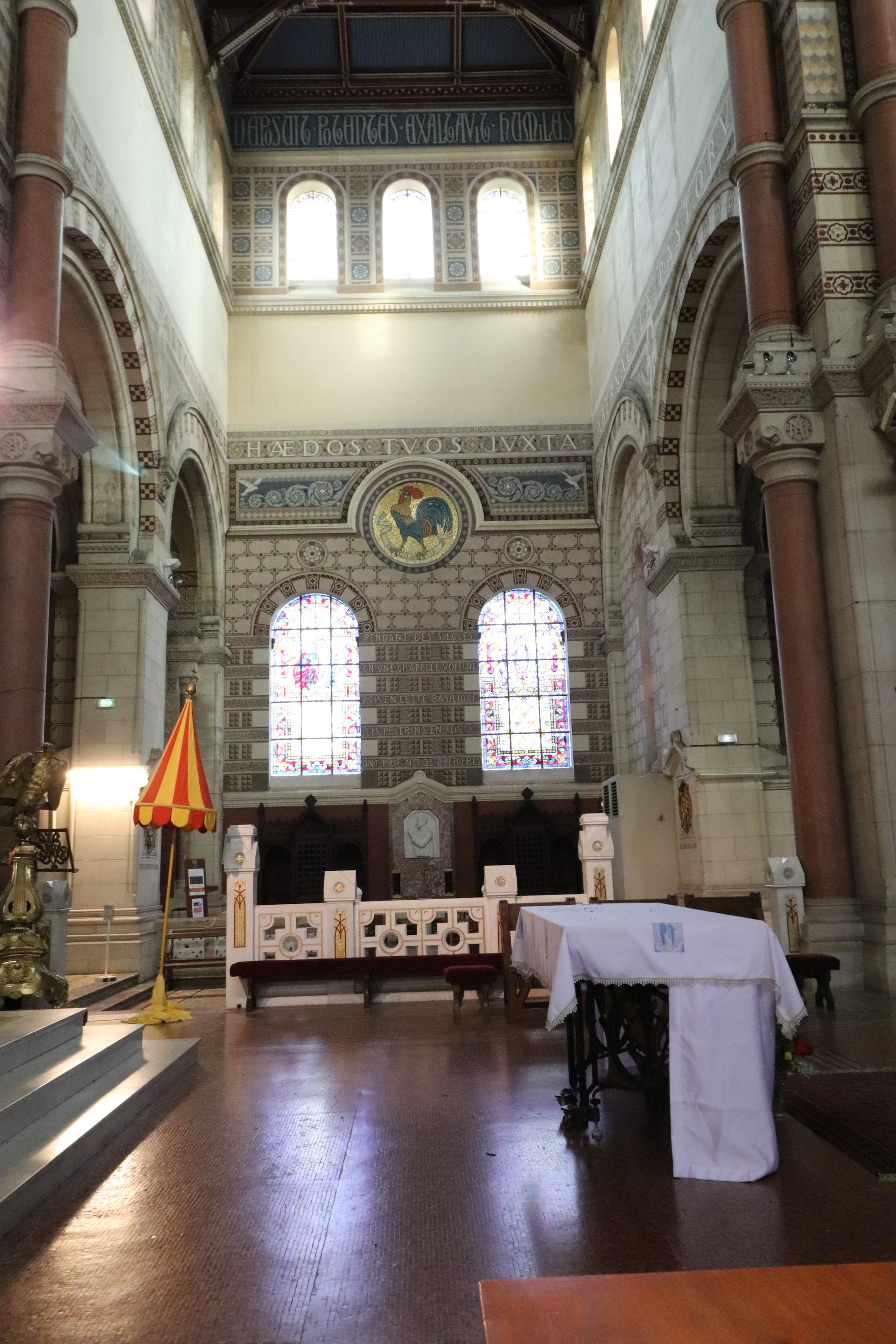
The multi-coloured and decorated framework, dating from 1929.
Each case illustrates an invocation from the litanies of the Virgin Mary.
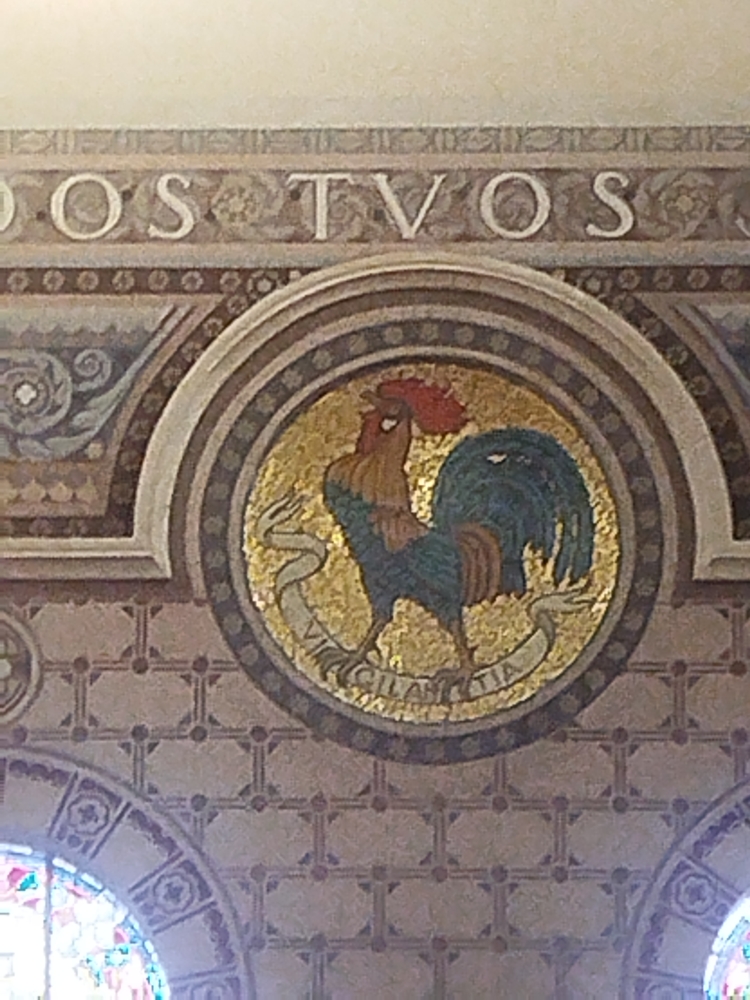
The mosaic cockerel, very pretty and shiny, renovated thanks to Stéphane Berne's Heritage Lottery, great presenter of television programs about History.
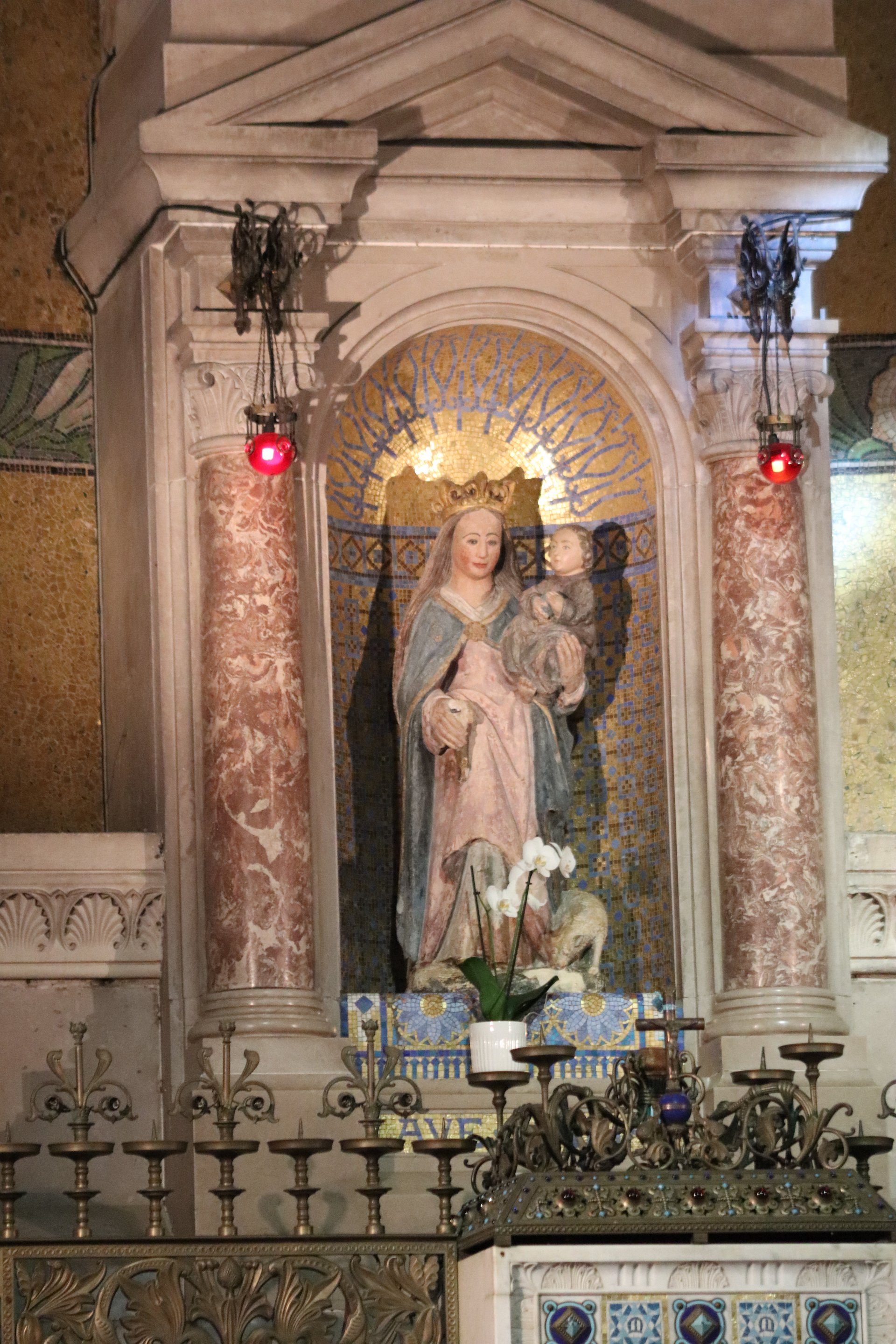
At the back of the Basilica, don't miss the famous polychrome stone statue of the Virgin and Child, dating from the 14th Century and representing the Virgin found miraculously in the 11th Century by the shepherd and his sheep.
Take the small staircase. Touch it and it would bring you good luck!
It is also said that she was locked away in a safe place immediately after her discovery, and that whenever someone tried to show her to another person, she would repeatedly disappear. Everyone would go looking for her, and she would always be found near the Ancre River.
This is also why the architect chose to build the Basilica on the Ancre River, so that the statue would be happy there.
At the time, constructing such a building above water represented a decisive technical challenge.
The structure made it possible to preserve the natural course of the water by maintaining its flow below the structure.
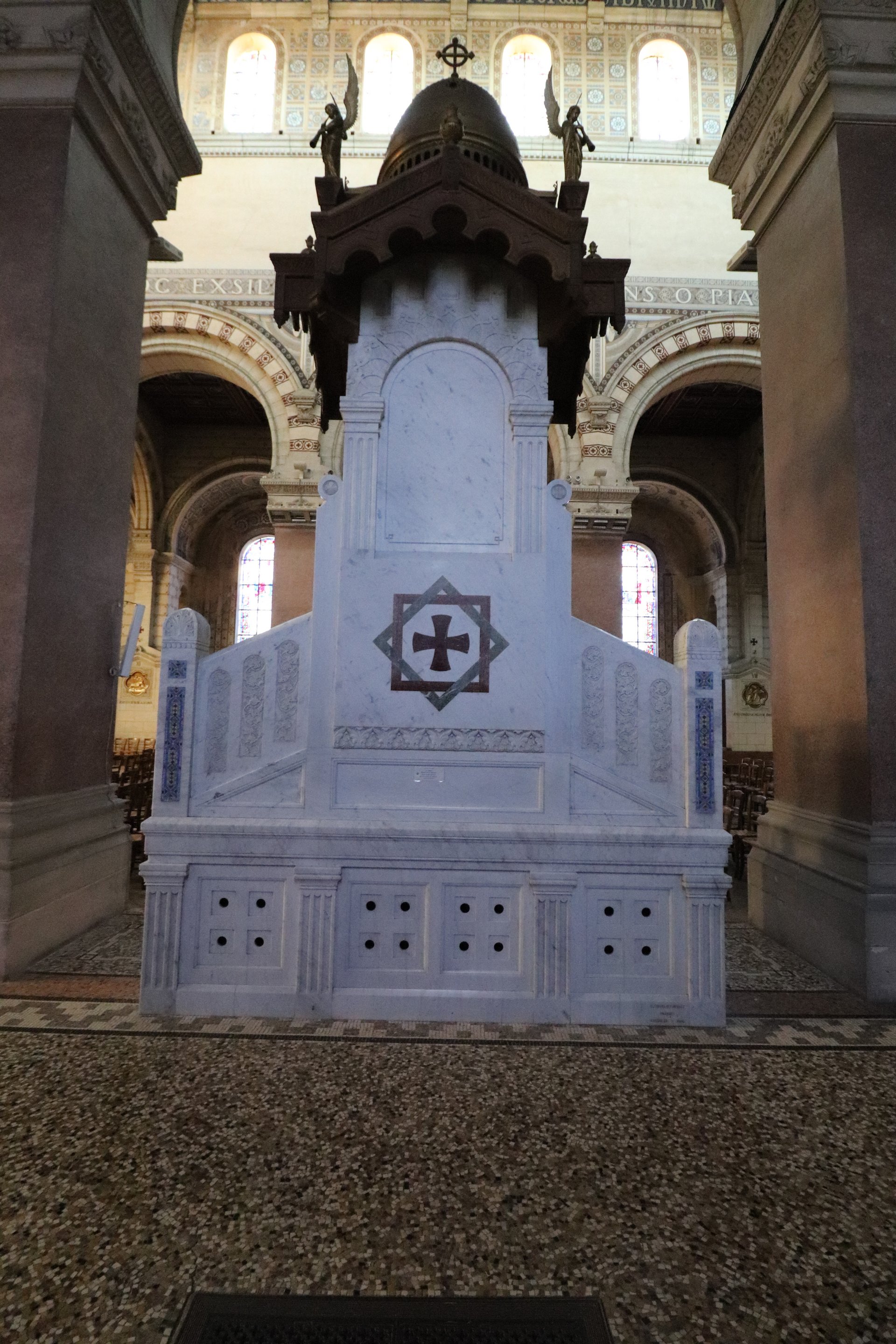
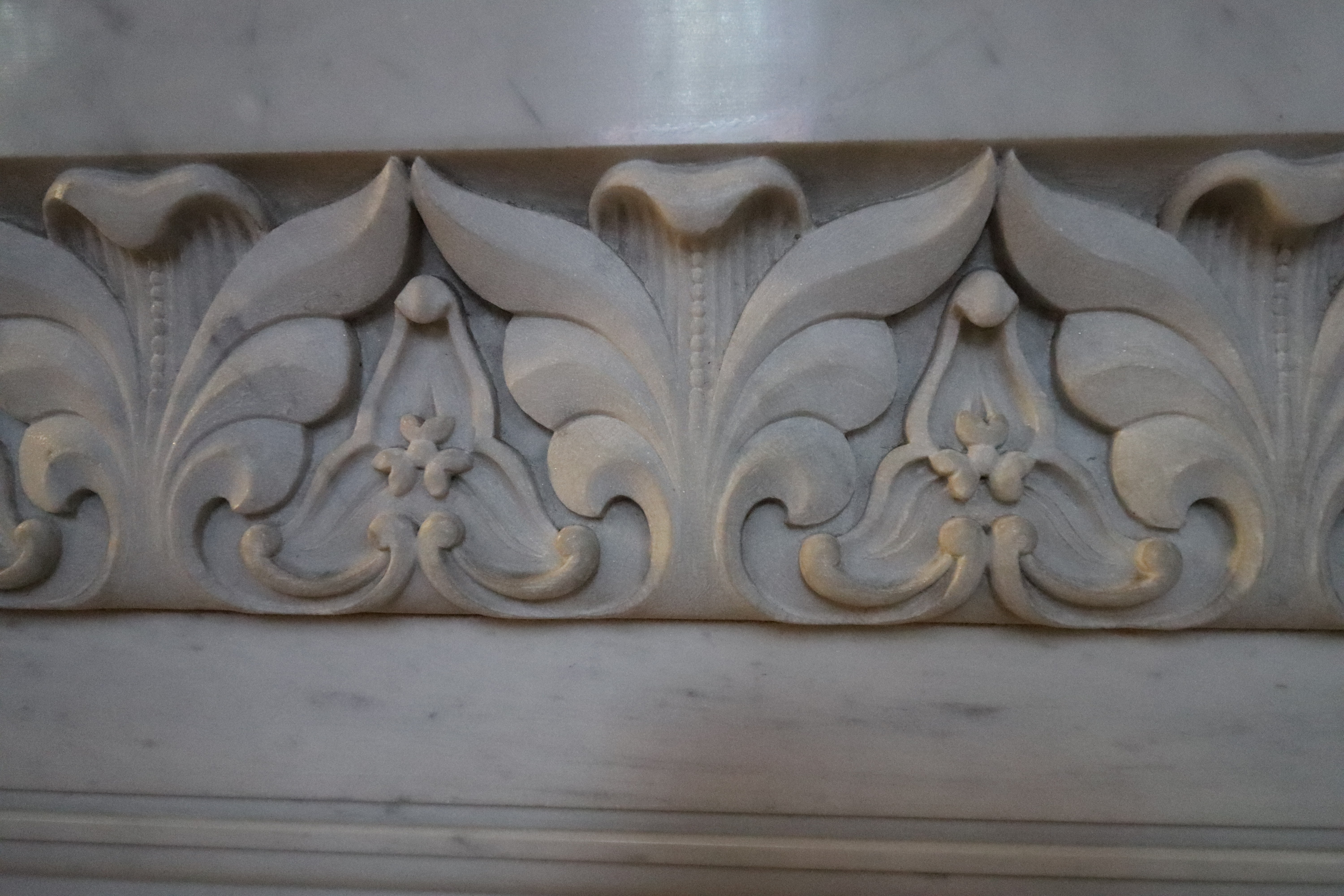
It is sculpted in Carrara marble and is the perfect blend of elegance and refinement in the Art Deco style.
Look at the finely carved wood, the delicate roses, or even the geometric of the mosaic.
Four gilded copper angels watch over this sacred place, adding a celestial dimension to the pulpit.
Our pulpit is as important to our Basilica as the Mona Lisa is to the Louvre.